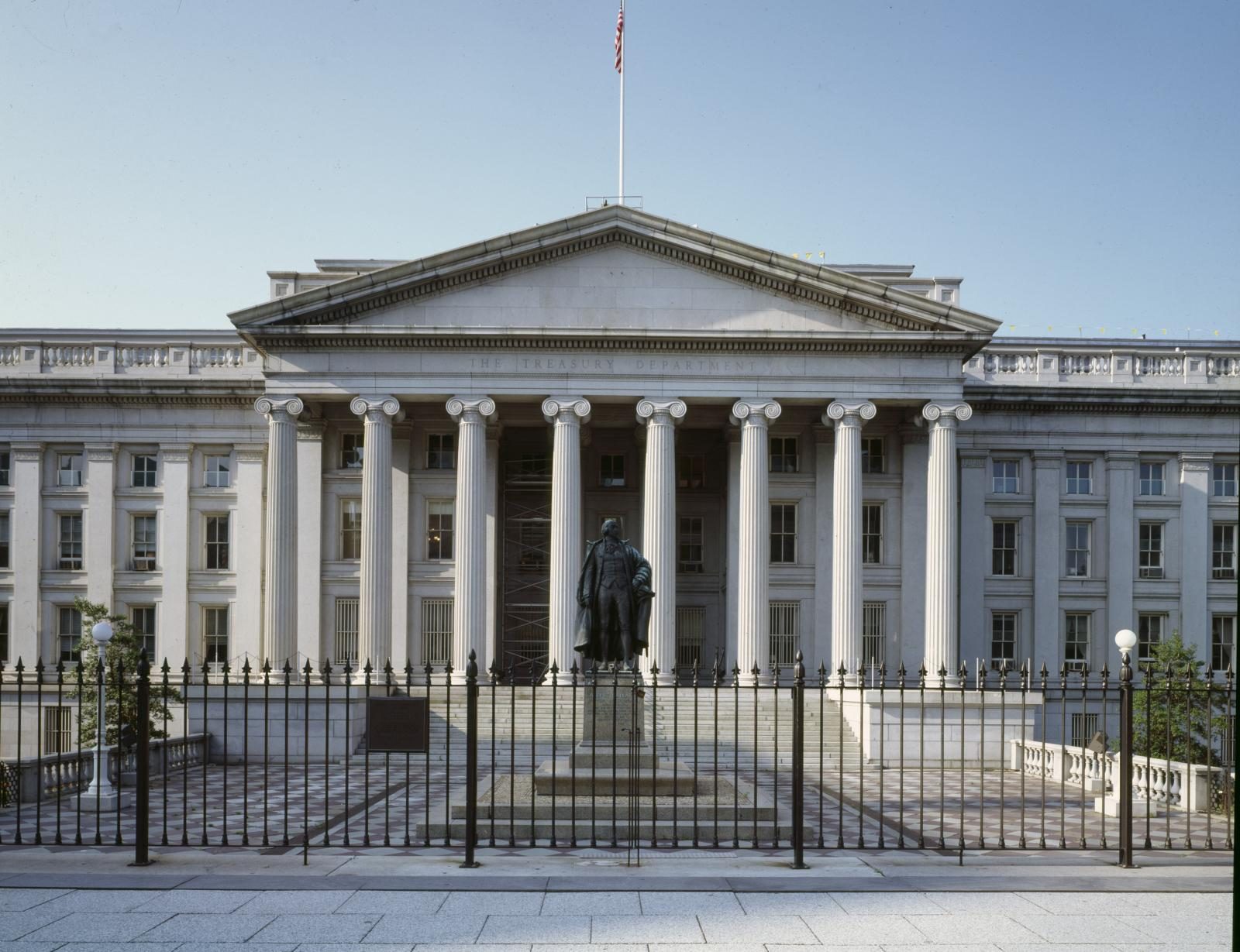
The U.S. Department of the Treasury on Monday published an economy statement for the Treasury Borrowing Advisory Committee. It says the economy grew at a 3.4% annual rate in the third quarter of 2026, according to the advance estimate of real gross domestic product, and calls the outlook favorable.
The third-quarter pace was up from 2.2% in the second quarter and was the fastest of the last four quarters, the statement says. It says private domestic final purchases, a measure that combines consumer spending, business fixed investment and residential investment, rose 4.9% at an annual rate. The department described that as the strongest pace in over five years.
Business fixed investment, which covers spending on equipment, intellectual property and structures, grew 12.7% and added 1.8 percentage points to GDP growth. Equipment investment rose 20.9%, and the statement says spending on data centers accelerated to a triple-digit pace. Personal consumption expenditures, or consumer spending, grew 3.8% and added 2.5 percentage points. Residential investment fell 3.3%, and net exports, which measure exports minus imports, subtracted 3.3 percentage points as the trade deficit widened.
On jobs, the statement says net new payrolls averaged 51,000 per month in the third quarter, down from 81,000 in the second. Private-sector job growth averaged 54,000 per month, compared with 79,000 in the second quarter. The department said the private sector has added 634,000 net new jobs since December 2025. Federal payrolls were about 2.68 million workers, down from 3.01 million in January 2025.
The unemployment rate averaged 4.1% in the third quarter, down from 4.3% in the second quarter. Average hourly earnings were up 3.0% over the year through September, and the Employment Cost Index for private workers rose 3.4%.
Inflation was higher than a year earlier. Headline consumer prices rose 3.7% over the 12 months through September 2026, compared with 3.0% in the year through September 2025. The statement says energy drove roughly 40% of the increase. Core inflation, which leaves out food and energy, was 2.6%, down from 3.0%. Headline inflation in the Personal Consumption Expenditures price index, the measure the Federal Reserve targets at 2%, was 3.6% over the same period.
The statement lists several risks. It says energy prices and geopolitical uncertainty threaten the inflation outlook, and that energy prices should recede after the cessation of conflict in Iran. It also says hiring is slower than in the past, which could leave the economy with less room to absorb a shock. The median private-sector hires rate this year is 3.6%, compared with 4.2% in 2019.
The statement also addresses interest rates. It says the 10-year Treasury yield ended 2025 at 4.18% and was 76 basis points higher as of Oct. 30. A basis point is one-hundredth of a percentage point. The department said higher borrowing costs could worsen the federal debt path, but that U.S. fiscal sustainability does not appear to be a major driver of this year’s rise in rates.
The statement credits the Trump administration’s policies, including the tax law it calls the Working Families Tax Cuts, with driving a boom in business investment. It also says investment tied to what it calls super intelligence accounted for nearly 30% of GDP growth in the first three quarters of 2026. It describes the long-run effect on productivity and on the job market as uncertain.
The statement cites a Wall Street Journal survey of economists in October that put the average chance of a recession in the next 12 months at 24%. The statement does not say when the Treasury Borrowing Advisory Committee will next meet.