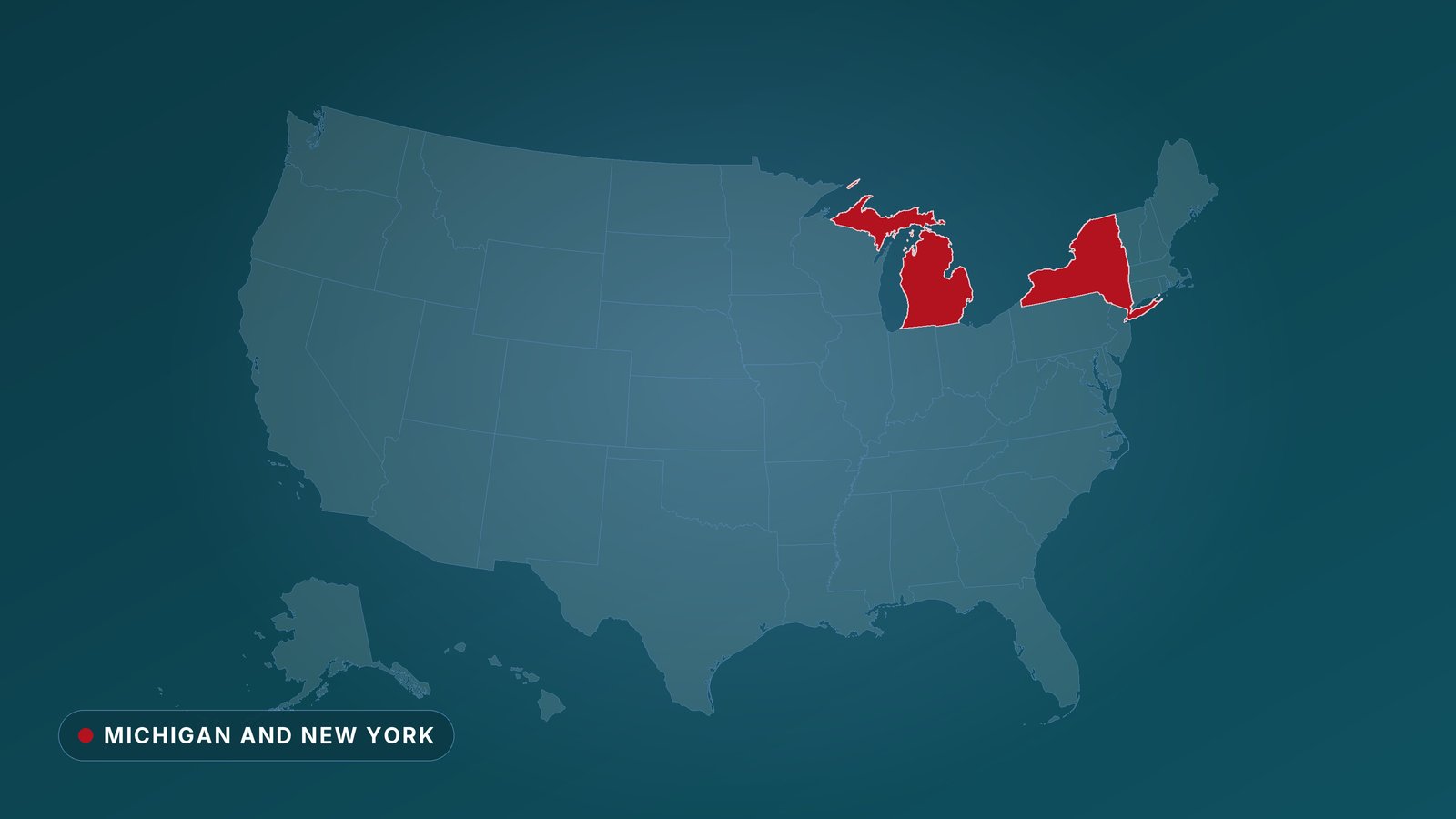
The Centers for Disease Control and Prevention on Thursday reported two clusters of a rare, life-threatening skin infection caused by Aspergillus molds among extremely preterm infants in neonatal intensive care units in Michigan and New York.
Five infants were infected during 2023 and 2024. One infant in Michigan died. The other four recovered after antifungal treatment, according to the agency’s Morbidity and Mortality Weekly Report.
Cutaneous aspergillosis is an infection of the skin by Aspergillus species, a group of molds common in the environment. Extremely preterm infants, defined in the report as those born before 28 weeks of gestation, are at higher risk because of immature immune defenses, underdeveloped skin, and frequent exposure to invasive medical devices. The report says previous health care-associated mold clusters have been linked to construction, contaminated health care textiles, contaminated medical equipment, and breaches in infection prevention.
The Michigan Department of Health and Human Services was notified in October 2023 of two patients in a level IV neonatal intensive care unit, the highest level of neonatal care. Both infants were born at less than 24 weeks of gestation, and skin lesions were found in the first week of life. Cultures grew Aspergillus fumigatus, and both infants received amphotericin B.
The first Michigan infant died during the second week of life. The report says the death was attributed to septic shock from aspergillosis, a Pseudomonas species infection, and extreme prematurity. The second infant recovered.
The Michigan investigation included on-site observations, staff interviews, and environmental sampling. One air sample collected near a corridor used for linen transport grew A. fumigatus. No definitive environmental source was identified. The facility converted negative-pressure areas in a shared nursery to positive pressure, repaired plumbing leaks, carpeting, and flooring, and designated a separate loading dock for clean linens and supplies.
The New York State Department of Health was notified during July through September 2024 of three patients in a separate level IV unit. Two infants were born at 24 to 25 weeks of gestation, and one was born at less than 24 weeks. State laboratory testing identified A. fumigatus in one infant and Aspergillus quadrilineatus in the other two. Whole-genome sequencing suggested that the two A. quadrilineatus isolates were closely related.
The first New York infant was treated with micafungin, the second with voriconazole plus amphotericin B, and the third with amphotericin B. All three survived. The facility found no specific areas of concern and no recent nearby construction. Environmental testing was not conducted.
Mitigation in New York included additional checks that linens were dry, replacement of some laundered linens with sterile towels, disposable positioning devices for extremely preterm infants, and sterile gloves during care in the first four days of life. The facility also provided chlorhexidine-gluconate-impregnated surgical scrubs for staff members and visitors, reviewed disinfectant products and sanitation procedures, inspected the air-handling system, and replaced high-efficiency particulate air filters.
A case was defined as isolation of Aspergillus species from cultures of suspicious skin lesions, such as redness or ulceration, in a patient admitted to the Michigan unit during October through November 2023 or the New York unit during July through September 2024. As of Sept. 1, 2026, no additional cases had been identified in either unit.
The report lists three limitations. No definitive environmental source was identified in either cluster. Requiring a positive skin-lesion culture might have led to undercounting. Several mitigation measures were implemented at the same time, so the effectiveness of any one step could not be evaluated.
The report says clinicians should consider cutaneous aspergillosis in extremely preterm neonates with skin lesions. It says early recognition and coordinated assessment by clinicians, infection preventionists, and facility engineers can guide mitigation, improve outcomes, and prevent additional cases. It also says mitigation should not be delayed while awaiting identification of a definitive environmental source.