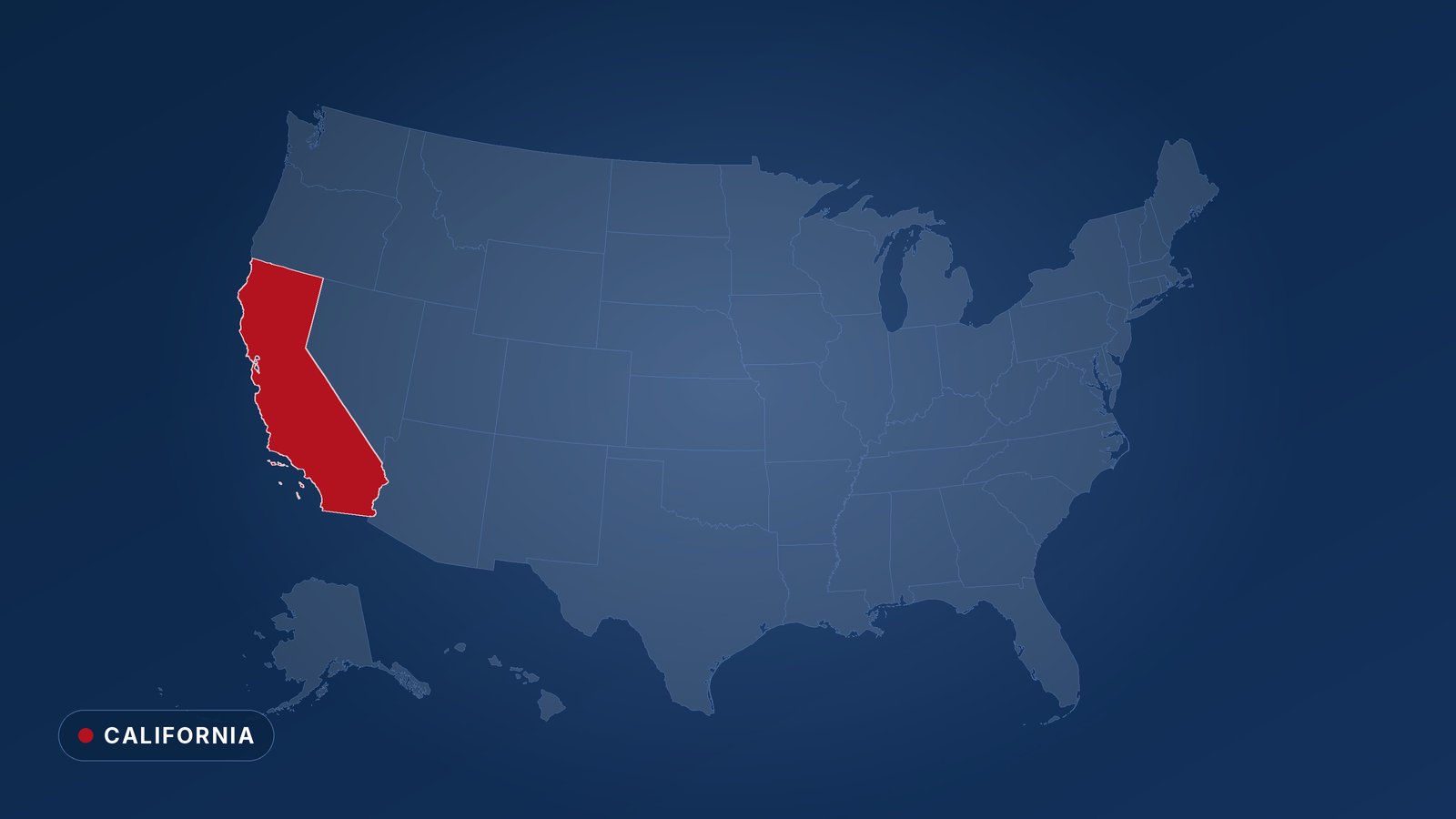
Executive Order 14377 directs the Department of Homeland Security and the Small Business Administration to consider rules that could set aside some state and local permits for rebuilding with federal disaster aid. The order was signed at the White House on Jan. 23, 2026, and published in the Federal Register on Jan. 29, 2026.
The order says federally funded work to rebuild homes and businesses in the Pacific Palisades and Eaton Canyon areas of Los Angeles should proceed as fast as public safety allows. It says federal aid should not be held up by permitting requirements the order calls unnecessary, duplicative, or obstructive.
The order states that wildfires about a year earlier burned nearly 40,000 acres of homes and businesses in Los Angeles. It says California and Los Angeles city and county governments failed to contain the fires and later delayed rebuilding. It says most of the tens of thousands of destroyed homes and businesses had not been rebuilt a year later.
The order says debris removal did not start until after Executive Order 14181 of Jan. 24, 2025. It says the federal government then completed hazardous-materials sweeps and cleared more than 9,500 properties, removing more than 2.6 million tons of debris in six months. Executive Order 14377 does not revoke that earlier order. It cites a major-disaster declaration for California, listed as FEMA-4856-DR.
The secretary of homeland security, carrying out the work through the person who runs the Federal Emergency Management Agency, and the SBA administrator must each consider regulations. Those rules would preempt state or local permitting, and similar pre-approval steps, that an agency finds have unduly slowed use of federal emergency-relief funds. The funds are those used by homeowners, businesses, or houses of worship to rebuild after a disaster.
Builders would instead certify to a federal designee from each agency that a planned structure meets applicable state and local health and safety standards. Any proposed regulations must be published within 30 days of the order, and final regulations within 90 days. Each agency head must consider whether public notice and comment is unnecessary under federal administrative law.
The secretary, through the FEMA administrator, must keep reviewing repairs and construction under the order for compliance with health, safety, and other substantive standards.
Heads of relevant agencies must seek to use authority under federal environmental, historic-preservation, and natural-resource laws to speed waivers, permits, reviews, consultations, and approvals. The order names the National Environmental Protection Act, the Endangered Species Act, and the National Historic Preservation Act. The steps cover homes, businesses, and other structures to be rebuilt with federal emergency-relief funds, and must follow applicable law.
Those reviews are to be limited to the smallest scope and shortest time needed to advance the order and to carry out Individual Assistance and Hazard Mitigation Grant Programs, while protecting public health and safety. Each agency head must name a senior official so the work is not delayed.
Within 90 days, the secretary, through the FEMA administrator, and the SBA administrator must submit legislative proposals through the director of the Office of Management and Budget. They must consult the White House official responsible for domestic policy and the official who leads the White House’s work with Congress. The proposals are to help FEMA and the SBA respond when a state or a local government is not making a prompt recovery possible after a disaster, including by using rules.
The order also requires a review of Hazard Mitigation Grant Program funding granted to California. Within 30 days, the secretary, through the FEMA administrator, must determine what amount, if any, of nearly $3 billion in unspent funding was awarded in an arbitrary or capricious way, or contrary to law. The order says the money was awarded to reduce hazards, including future wildfire threats.
Within 60 days, the same officials must audit California’s use of that funding. The audit is to cover whether projects were finished as approved and on time, whether expected risk reduction matched results, and whether the money demonstrably reduced the impact of future wildfires.
Within 30 days after the audit, the secretary, through the FEMA administrator, must make administrative decisions based on the findings. Where appropriate, the order says, enforcement may include future grant conditions, recoupment or recovery under applicable law, or oversight and technical help for individuals, families, and small businesses.
The order says it must be carried out consistent with applicable law and only if appropriations are available. It states that it creates no right anyone can enforce in court against the United States. The Department of Homeland Security is to pay the cost of publishing the order.