NASA and American space exploration advance through programs that test new technology and answer scientific questions. The National Aeronautics and Space Administration (NASA) began in 1958 and led missions across human spaceflight, robotic exploration, aeronautics, and Earth observation, according to the NASA History Office. The agency describes a new era of lunar missions under Artemis that builds on this history.
A timeline of NASA and American space exploration
Last checked against its official sources on Nov. 1, 2026. Explainers are re-checked regularly.
- Oct. 4, 1957The Soviet Union launches Sputnik 1, starting the space race.
- Jan. 31, 1958Explorer 1 launches and detects the Van Allen Radiation Belt.
- Oct. 1, 1958NASA begins operations as the U.S. civil space agency.
- May 5, 1961Alan Shepard becomes the first American in space.
- Feb. 20, 1962John Glenn orbits Earth in the first U.S. orbital flight.
- June 3, 1965Ed White performs the first U.S. spacewalk during Gemini 4.
- Jan. 27, 1967A fire during a ground test kills the Apollo 1 crew.
- July 20, 1969Apollo 11 lands on the Moon; Armstrong and Aldrin walk.
- April 12, 1981The first Space Shuttle mission, STS-1, launches.
- Jan. 28, 1986Space Shuttle Challenger is lost shortly after launch.
- November 2022Artemis I launches as an uncrewed test of SLS and Orion.
- April 2026Artemis II launches on a crewed voyage around the Moon.
Dates and events as stated in the official sources listed below, through 2026.
Launching NASA
Congress created NASA on Oct. 1, 1958, in response to the growing importance of space during the Cold War, according to the NASA History Office. NASA absorbed the National Advisory Committee for Aeronautics, including its staff and laboratories, and soon incorporated the Jet Propulsion Laboratory and the Army Ballistic Missile Agency. The NASA History Office notes that the United States launched Explorer 1 on Jan. 31, 1958, identifying the Van Allen Radiation Belt, and that NASA began conducting missions within months of its creation.
Early satellites and the space race
A major turning point came on Oct. 4, 1957, when the Soviet Union launched Sputnik 1, which the NASA History Office says triggered increased U.S. spending and new agencies for air and space research. The United States had prepared satellite plans for the International Geophysical Year, and Explorer 1’s success helped start a series of scientific missions to the Moon and planets. NASA also pioneered applications satellites for communications and weather, including Echo, TIROS, and Telstar, according to the NASA History Office and NASA’s “60 Moments in NASA History.”
Mercury and Gemini: Proving human spaceflight
NASA’s Project Mercury tested whether humans could survive spaceflight. According to the NASA History Office, Alan Shepard became the first American in space on May 5, 1961, and John Glenn became the first U.S. astronaut to orbit Earth on Feb. 20, 1962. Project Gemini then practiced key operations such as rendezvous, docking, and spacewalking; on June 3, 1965, Edward White made the first U.S. spacewalk, NASA says.
Apollo: To the Moon
NASA states that President John F. Kennedy made Apollo a national priority on May 25, 1961, to land a human on the Moon and return safely. The program faced tragedy on Jan. 27, 1967, when a fire killed three Apollo astronauts during a ground test; NASA overhauled the spacecraft and continued. Apollo 8 orbited the Moon on Dec. 24–25, 1968, and Apollo 11 landed on July 20, 1969; Neil Armstrong and Buzz Aldrin walked on the lunar surface while Michael Collins orbited above, according to the NASA History Office. NASA notes that six Apollo missions landed on the Moon through Apollo 17 in December 1972, and that Apollo 13 in April 1970 safely returned after an oxygen tank burst.
Skylab and Apollo-Soyuz: Living and working in orbit
After Apollo, NASA used Saturn rockets to launch Skylab in 1973 as an orbital workshop, the NASA History Office says. Three crews stayed 28, 59, and 84 days, and the first crew repaired a meteoroid shield in orbit, demonstrating complex work in space. In 1975, NASA and the Soviet Union flew the Apollo-Soyuz Test Project, the first international human spaceflight, to test joint rendezvous and docking.
Shuttles and setbacks
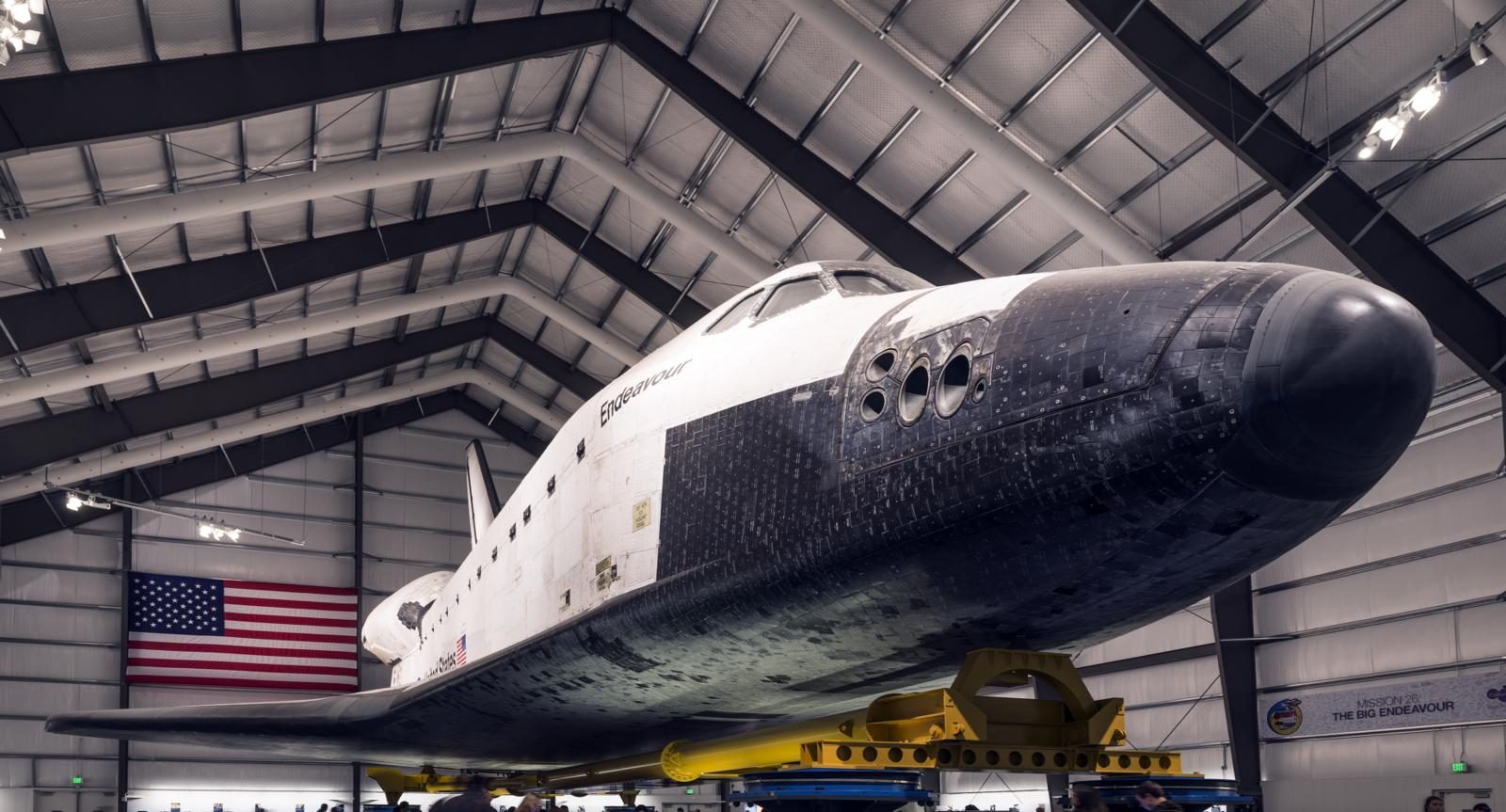
NASA returned to human spaceflight in 1981 with the Space Shuttle, a reusable spacecraft for travel to and from Earth orbit. The NASA History Office records the first mission, STS-1, launched on April 12, 1981, and the first Shuttle spacewalk in April 1983; Sally Ride became the first American woman in space on June 18, 1983. NASA reports that the Challenger accident on Jan. 28, 1986, killed seven crew members and grounded the Shuttle until safety improvements; the program then returned to flight, enabling a wide range of missions.
Robotic exploration and observatories
NASA’s robotic missions expanded knowledge of the solar system. The NASA History Office notes Pioneer 10 (March 2, 1972) and Pioneer 11 (April 5, 1973) to Jupiter and Saturn, and Voyagers 1 and 2 launched on Sept. 5 and Aug. 20, 1977. The Hubble Space Telescope launched in 1990, and a December 1993 servicing mission installed corrective optics that “worked perfectly” to restore its capabilities, NASA says. Mars Global Surveyor launched on Nov. 7, 1996, and began mapping in 1998; Mars Pathfinder landed on July 4, 1997, and deployed the Sojourner rover, which NASA describes as a scientific and popular success. Earlier, Viking 1 had landed on Mars in 1976, beginning decades of Red Planet exploration, according to NASA’s “60 Moments.”
Building an international space station
Congress authorized a new space station in 1984; after redesigns, partners joined to build the International Space Station (ISS), according to the NASA History Office. Russia, the United States, and other partners agreed in 1993 to cooperate on the ISS, drawing on Russian Salyut and Mir experience. NASA’s timeline notes that the first element, Zarya, launched on Nov. 20, 1998, and STS-88 joined Unity to Zarya on Dec. 6, 1998, beginning ISS construction.
Earth and aeronautics
NASA’s Landsat program began in the 1970s and changed how scientists observe Earth’s land, oceans, and atmosphere, the NASA History Office reports. Landsat satellites launched in 1972, 1975, and 1978, with data used for environmental and commercial applications. In aeronautics, NASA advanced hypersonics with the X-15, developed the supercritical wing, and pioneered digital fly-by-wire systems starting in 1972, work that informed later aircraft and the Space Shuttle, according to the NASA History Office and NASA’s timeline.
Artemis: Returning to the Moon
NASA describes Artemis as a series of increasingly complex lunar missions to prepare for human missions to Mars. According to NASA, Artemis I launched in November 2022 as an uncrewed test of the Space Launch System (SLS) rocket and Orion spacecraft. NASA states that in April 2026, Artemis II launched on a nearly 10-day crewed voyage around the Moon, marking Orion’s first mission with astronauts. NASA adds that later Artemis missions will demonstrate docking with commercial human landing systems and aim for a crewed lunar landing.
Sources
- A Brief History of the National Aeronautics and Space Administration — NASA History Office
- 60 Moments in NASA History — NASA
- Artemis — NASA
- International Space Station history — NASA Johnson Space Center
How this article was made
- Written with
- GPT-5 (OpenAI)
- Fact-checked by
- Gemini 3.1 Pro (Google) — passed
- Generated
- Nov. 1, 2026, 8:59 a.m. ET
- Sources used
- 4 official sources, listed above
- Last checked
- Nov. 1, 2026, against the official sources above
- Article type
- Explainer
The AI wrote only from the sources listed. No human reporter was involved. Read our standards or compare the models in the AI Report Card.