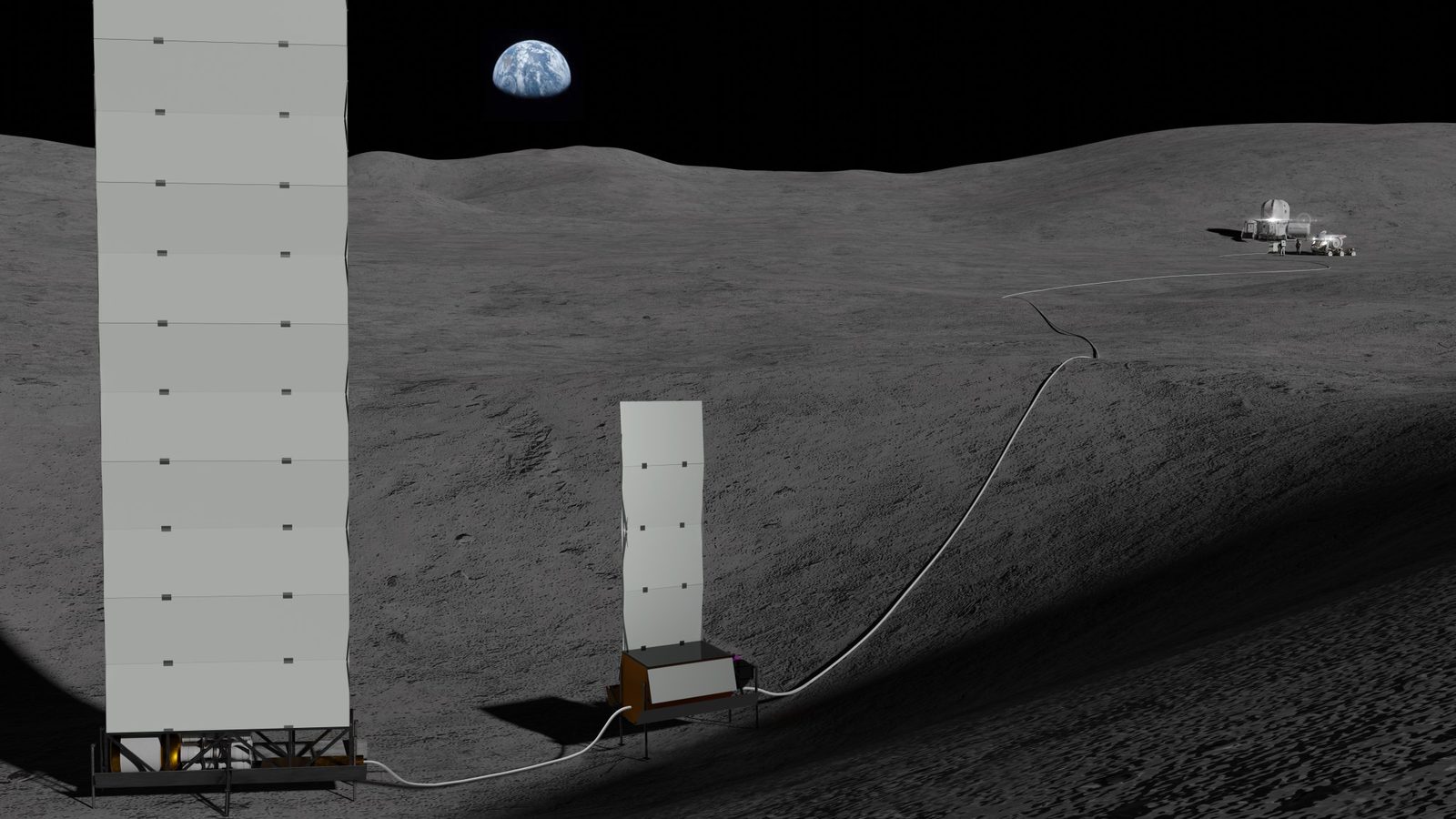
NASA on Monday sought industry partners to design, build, and test the first nuclear reactor intended to provide electricity on the Moon, according to the agency. The Lunar Reactor-1 system would supply steady power for future habitats, rovers, communications, scientific instruments, and other infrastructure, NASA said.
NASA said the small fission power system, called Lunar Reactor-1, is planned to produce 20 kilowatts of electricity, which the agency described as enough to power about 16 average U.S. households annually on Earth. The agency aims to have a launch-ready system by 2030 and to run on the lunar surface for a minimum of five years once deployed.
The agency said a nuclear reactor can generate electricity continuously, including during the Moon’s roughly two-week nights, unlike solar power that depends on sunlight. “A reliable source of safe and abundant energy will be vital to future exploration of the lunar and Martian surface,” said Brian Giblin, NASA’s Lunar Reactor-1 program manager.
NASA said its Space Power and Reactor Capabilities Request for Proposals incorporates feedback from a draft released in August and an industry day held in September at the Ohio Aerospace Institute in Cleveland. The solicitation requires the reactor to meet Department of Energy safety standards for nuclear operations. Proposals are due by Dec. 21.
While the primary purpose is to advance the technology, testing, and flight design of Lunar Reactor-1, NASA said it may issue additional task orders to support other space nuclear power systems. The agency said Lunar Reactor-1 is managed by NASA’s Space Reactors Division in partnership with the Department of Energy.
NASA added that the division also manages Space Reactor‑1 Freedom, scheduled to launch in 2028. According to the agency, SR-1 Freedom is slated to carry three SkyFall helicopters to Mars and to test nuclear electric propulsion, a system that powers spacecraft propulsion with electricity from a nuclear reactor.