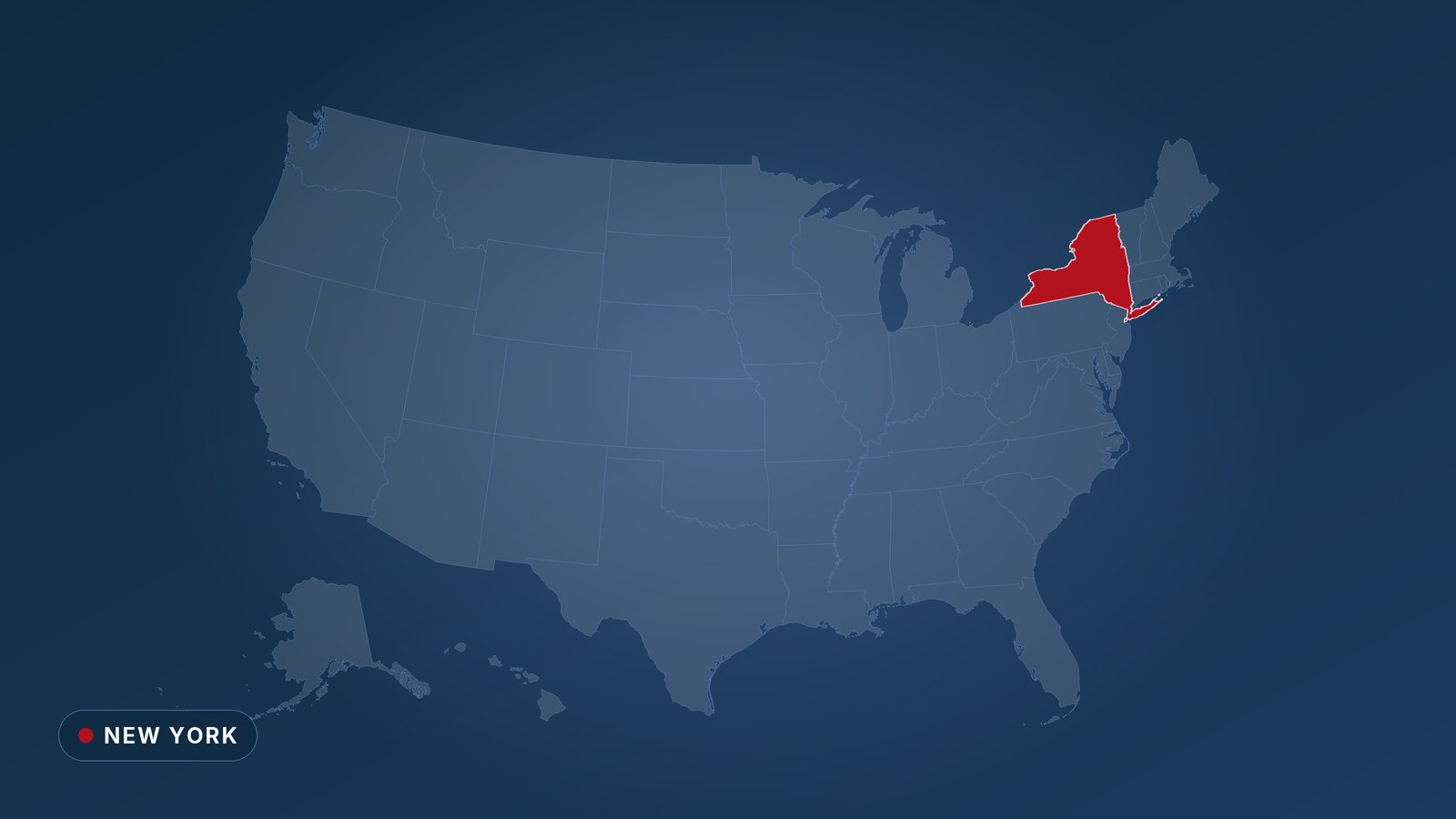
Governor Kathy Hochul on Wednesday released letters from two New York agencies asking U.S. Immigration and Customs Enforcement and a contractor for information about a tent detention site under construction in Batavia.
The New York State Department of Environmental Conservation and the New York State Department of Health wrote to ICE Deputy Director Charles Wall and to Laura Mitchell, president of Akima Infrastructure Protection LLC. The governor’s office said the letters demand answers on how people at an expanded Buffalo Service Processing Center would be kept safe as harsh winter weather nears in Western New York. The office said the state has not been contacted or given details by the federal government or Akima.
The agencies wrote that they “understand from public reporting” that the site “may be used to detain up to 100 women” and will employ numerous staff. The governor’s office said New York wants a detailed account of how the Batavia site will run because of concerns about possible effects on human rights, the environment and public health. The agencies asked for a written reply by Wednesday, Nov. 25, 2026.
In the letter to ICE, the agencies said they have been given nothing about the tent site. They wrote that they understand Akima has a contract with ICE or the Department of Homeland Security to build and run a temporary detention structure for up to 100 female detainees of all security levels. Public contracting papers, the letter said, describe a soft-sided building next to the Batavia processing center. The letter said news reports confirm that construction is underway.
The agencies asked whether ICE or another federal agency has allowed Akima to connect to water, sewage, electrical or other systems already at the center or elsewhere. The letter said federal contract documents require the site’s utilities to operate on their own and bar links to existing systems unless the government specifically allows them. They also asked whether any permits, registrations or approvals have been sought or granted.
The letter asked whether any environmental review has been done, or whether officials have decided a full study is not required, under the National Environmental Policy Act, the federal law that requires review of major federal actions. It asked whether federal officials have consulted local governments under that law or the Intergovernmental Cooperation Act, and it requested copies of any such letters. The agencies wrote that meeting those federal duties is the federal government’s responsibility.
A separate letter to Akima asks about the design and construction, the agencies wrote, and they asked ICE to supply those answers if it has them. Responses should be emailed to both state agencies, the letter said.
The agencies wrote that a safe, environmentally sound tent facility can be hard to build and maintain, and that long stretches of subfreezing weather and winter storms can add difficulty. They cited federal oversight findings at other tent immigration sites. They wrote that the U.S. Government Accountability Office recently reported problems preventing and controlling tuberculosis at Camp East Montana at Fort Bliss in Texas. They also wrote that the Department of Homeland Security’s Office of Inspector General recently found unsanitary drinking water, limited showers, insect infestations and a higher risk of illness from poorly stored food at the Everglades Detention Facility, a tent site in Florida.
The letter said the state agencies’ authority can cover pollution of water, land and air, hospital capacity, food sanitation and drinking-water contamination, depending on the project. It said Akima may need state permits or registrations. The letter did not say whether ICE or Akima has answered. The governor’s office did not say what the state will do if no reply arrives by Nov. 25.