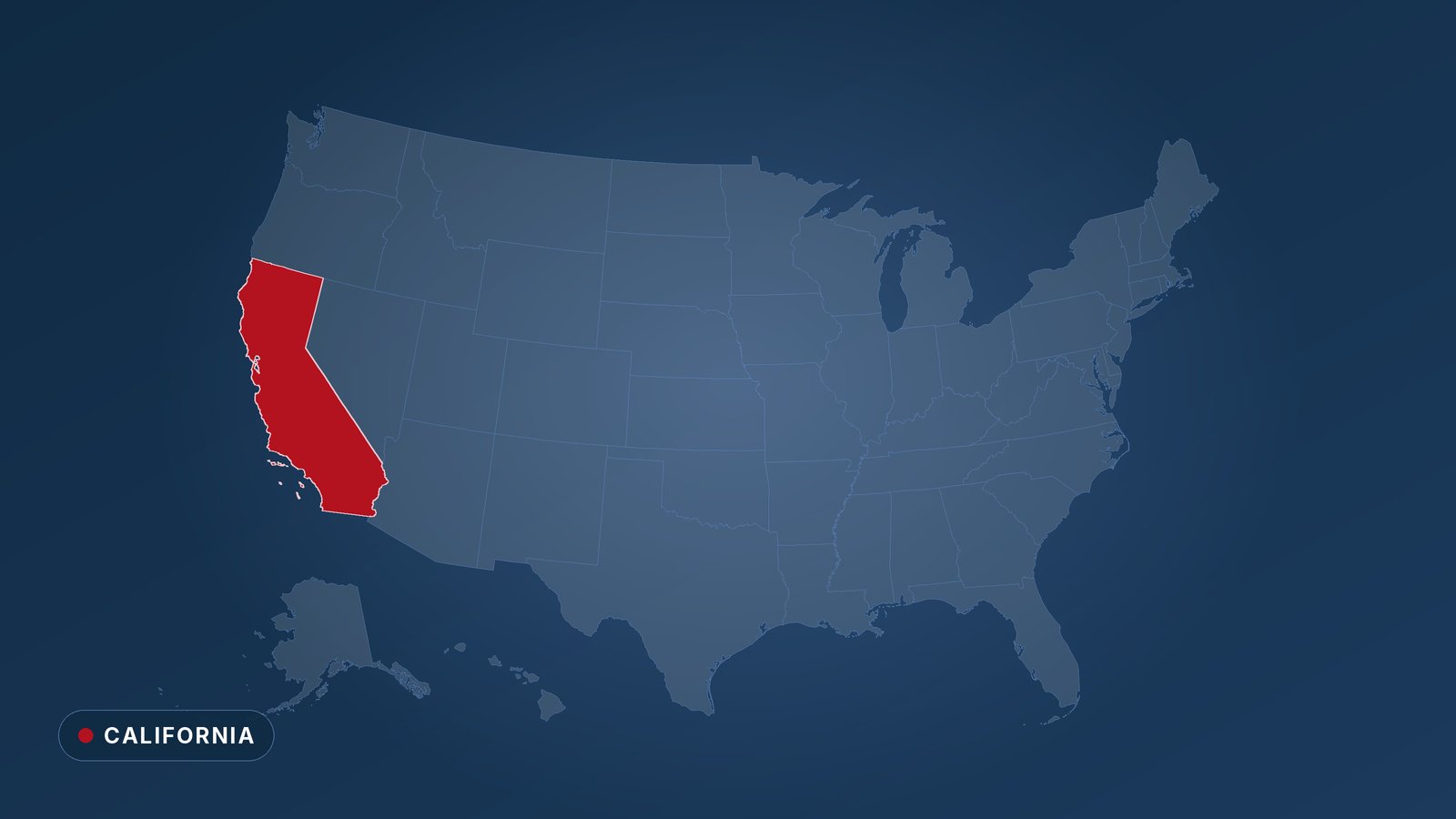
Governor Gavin Newsom on Monday highlighted California’s steps to secure Tuesday’s election and said the state is prepared to respond to interference, according to his office.
The governor’s office said the measures affect voter roll protections, election technology, vote-by-mail procedures, and the safety of voters and election workers. The office said the state invested nearly $40 million to help counties speed up counting, expand capacity, and fund voter outreach.
Newsom signed Senate Bill 73 earlier this year to begin protecting voter rolls, election technology, and election workers ahead of the June primary, his office said. He later signed a 13-bill election protection package that the office said safeguards California’s electoral system. To support these protections, the office said the final state budget included nearly $40 million for counties to hire staff, acquire technology and support voter education, and to assist a joint election security task force coordinated by the California Governor’s Office of Emergency Services with the California Department of Justice and the Secretary of State.
New laws take effect for the Nov. 3, 2026 General Election, the governor’s office said. Assembly Bill 282 makes it a felony to seize or direct the seizure of ballots, election records, or certified voting technology before results are certified. Senate Bill 259 makes it a felony for a person with authority to direct someone under their supervision to interfere with the delivery or return of a vote-by-mail ballot, and makes certain interference by a person in charge of a ballot a misdemeanor. Assembly Bill 730 (2019) and Assembly Bill 686 (2026) prohibit through Jan. 1, 2031 the distribution of materially deceptive “deepfakes” with actual malice intended to injure a candidate’s reputation or deceive a voter, unless the media includes a disclosure that it has been manipulated.
Senate Bill 884 requires all vote-by-mail drop-off locations to open at least 30 days before the election, prohibits law enforcement officers from making arrests within 200 feet of a polling place on Election Day except for a crime related to disrupting the operation of the polling place or a crime against a person or property, and authorizes a county board of supervisors to extend the prohibition on electioneering activities to up to 200 feet of specified voting locations, the office said. It also authorizes a county elections official to extend the time for closing the polls at a polling place if the official determines that voting there was disrupted as a result of a violation of the prohibitions on arrests or electioneering activities near polling places, according to the office. The office noted state law bars releasing state and federal results until all polling locations statewide have closed.
Other changes include Assembly Bill 1664, which requires notice to the Secretary of State and the Attorney General within one day after a local agency or elections official becomes aware of any warrant, subpoena, or active law enforcement investigation related to election records or certified voting technology. Senate Bill 1418 makes it a crime to take election materials or voting technology from the custody of election officials and expands the types of materials required for preservation if an election contest or criminal proceeding is ongoing. Senate Bill 1420 requires the Secretary of State to set uniform procedures so a voter can vote their vote-by-mail ballot at a polling location without the ballot’s identification envelope, and to include information in the state voter guide about early in-person voting opportunities.
The Governor and Legislature included $29 million for county staffing, technology and equipment to speed up counting and increase capacity, $5 million for county-level voter outreach, $5 million for statewide outreach via the Secretary of State, and $750,000 to support efforts to combat mis- and disinformation, the office said.
Over the weekend, Newsom sent a letter to the chief district judges for the four federal district courts in California highlighting resources for evaluating requests for search warrants for election materials, the office said. The office said this was aimed at ensuring election integrity and preventing misuse of the criminal process to stop counting or certification.
The governor’s office said attacks on the electoral process have increased, including attempts by the U.S. Department of Justice last week to throw out 20,000 votes in California that the department claimed with “high confidence” were noncitizens who received a ballot. The office said those claims were disproven by the department’s own staff and rejected by multiple federal judges. “No state has done more to prepare,” Newsom said.